Redesigning Rise Together’s website through changing the site architecture and UI based on user research.
Tools Used
Figma
Timeline
June 2025-August 2025
Role
UX Designer
Background
The recommended student counselor ratio is 250:1. The average national ratio is 376:1. Rise Together helps bridge the difference.
By providing first-generation, low-income students with personalized college application support, Rise Together ensures they receive the guidance and mentorship they often cannot access through their schools.
My Role
Redesigning the website information architecture and UI.
My first step was to understand my client's needs. Gina, the founder of Rise Together and a guidance counselor with 35+ years of experience, brings a deeply personal stake to this website and company. Her main objectives were it to be more heartfelt, student friendly, and aligned with Rise Together's mission.
The Impact
I reduced the average click count by 40%.
Although many of Gina's requests was focused solely on the UI elements, I also focused on the usability and navigation of this website to make it more student friendly.
Discovery & Analysis
Lack of brand consistency and poor information architecture
I started this redesign by doing a lot of preliminary user research. I conducted a website audit, competitor analysis, and initial usability study to understand how to approach this redesign.
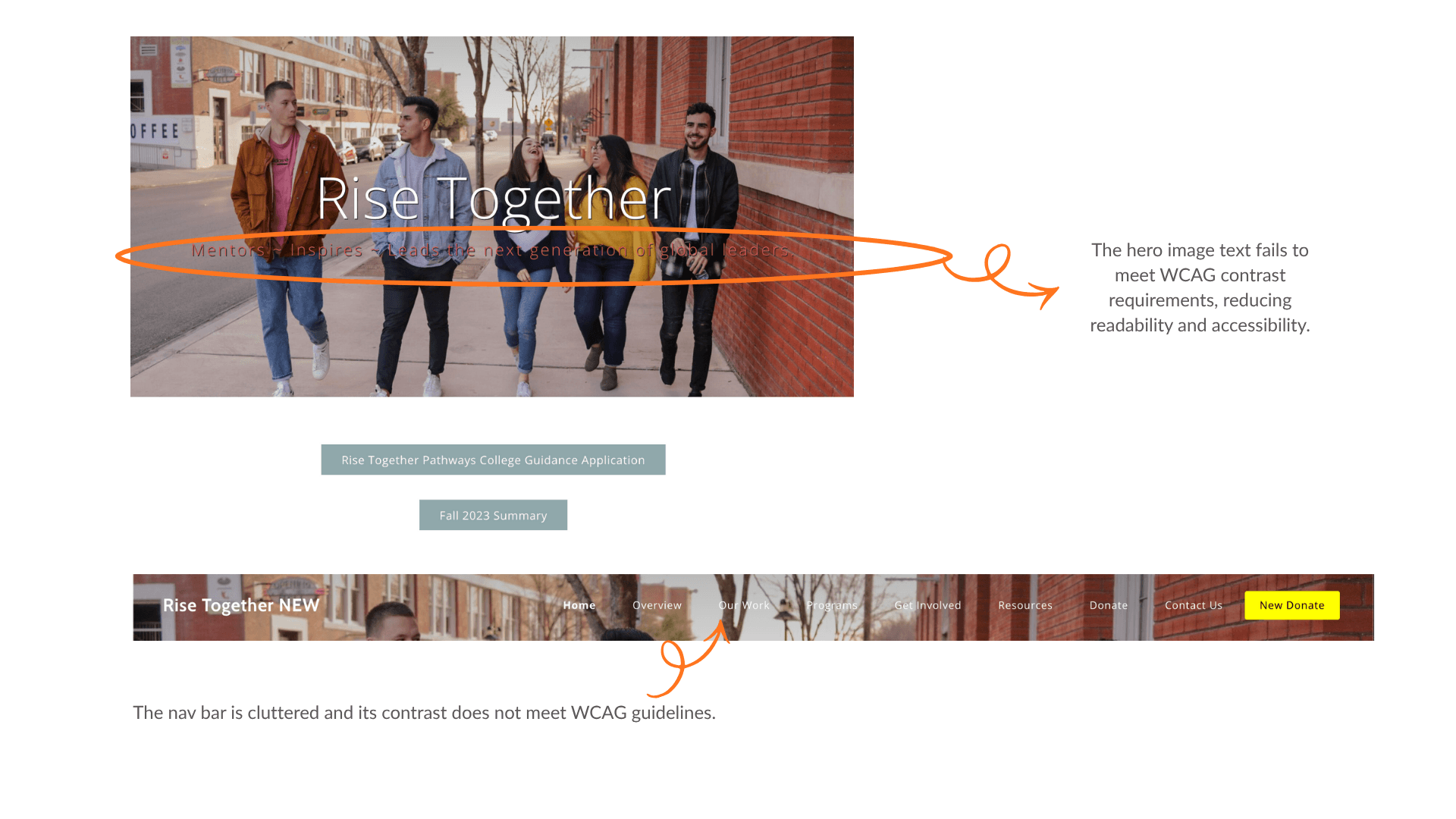
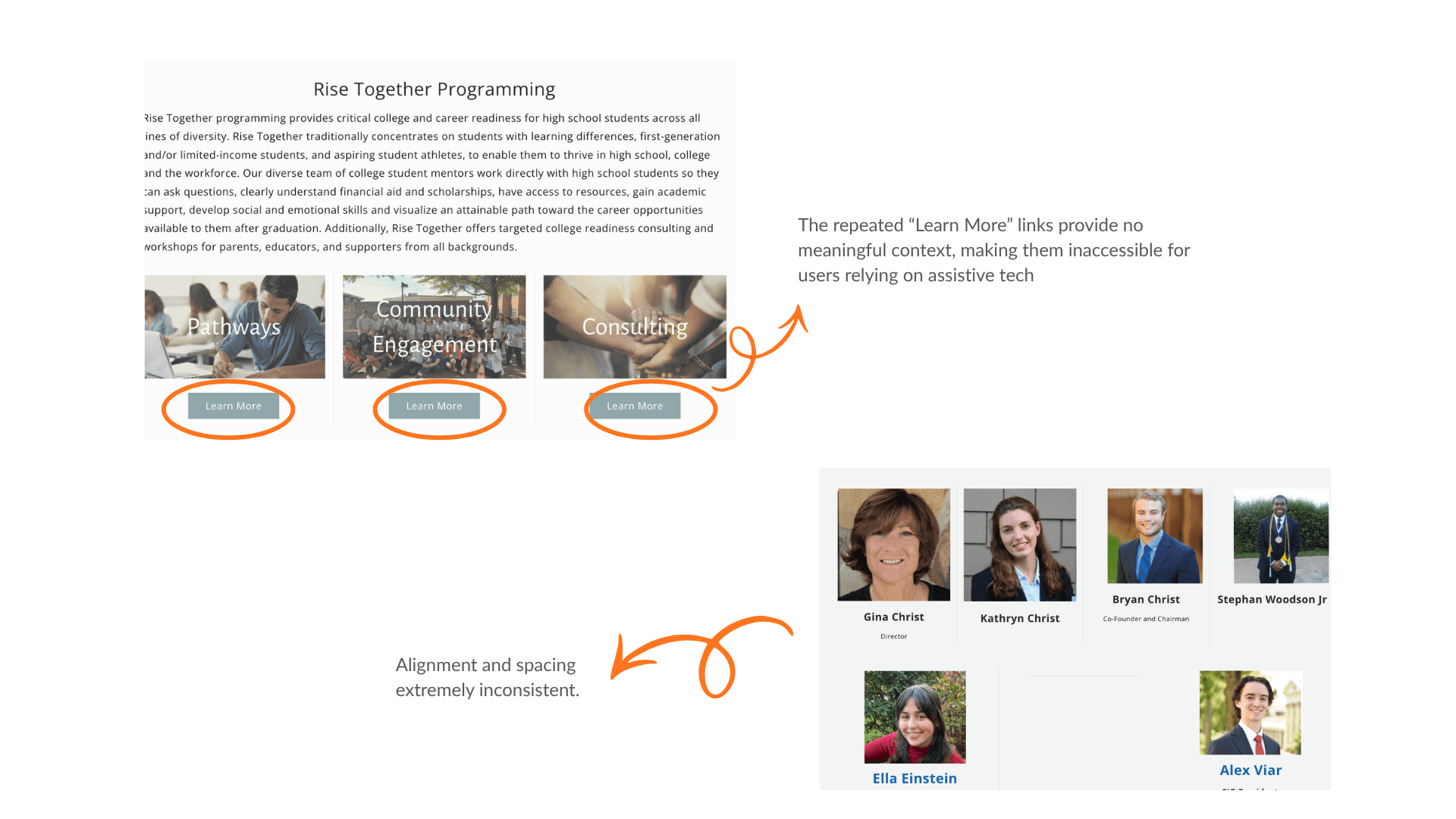
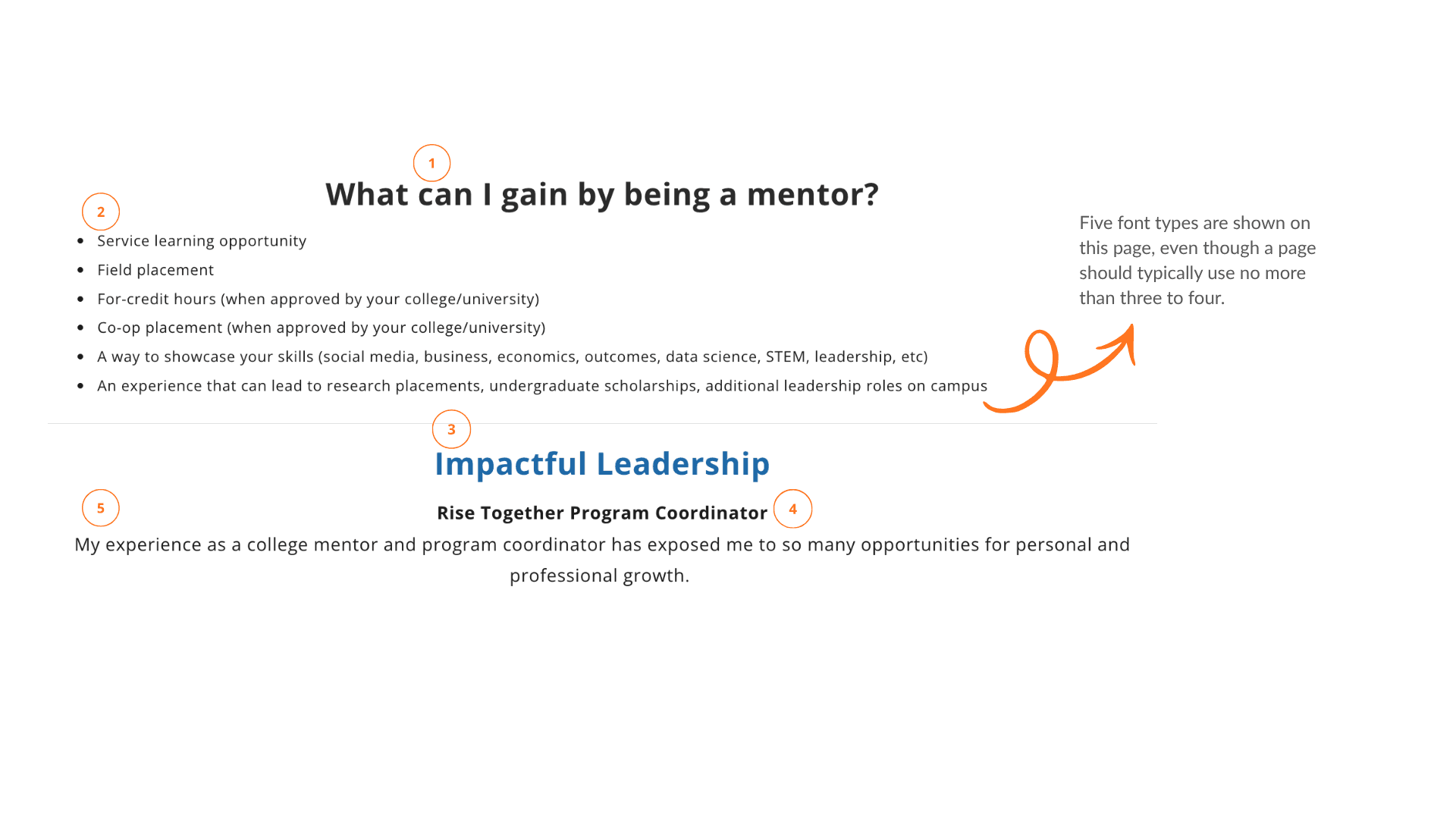
Website audit revealed lack of compliance with WCAG and other visual issues
Competitor analysis revealed greater need for impact
I did a competitor analysis on three websites: Matriculate, Big Brothers Big Sisters, and Spark the Journey. These are all mentorship websites. I looked at where they had their mission, visual design, navigation structure, and accessibility features.

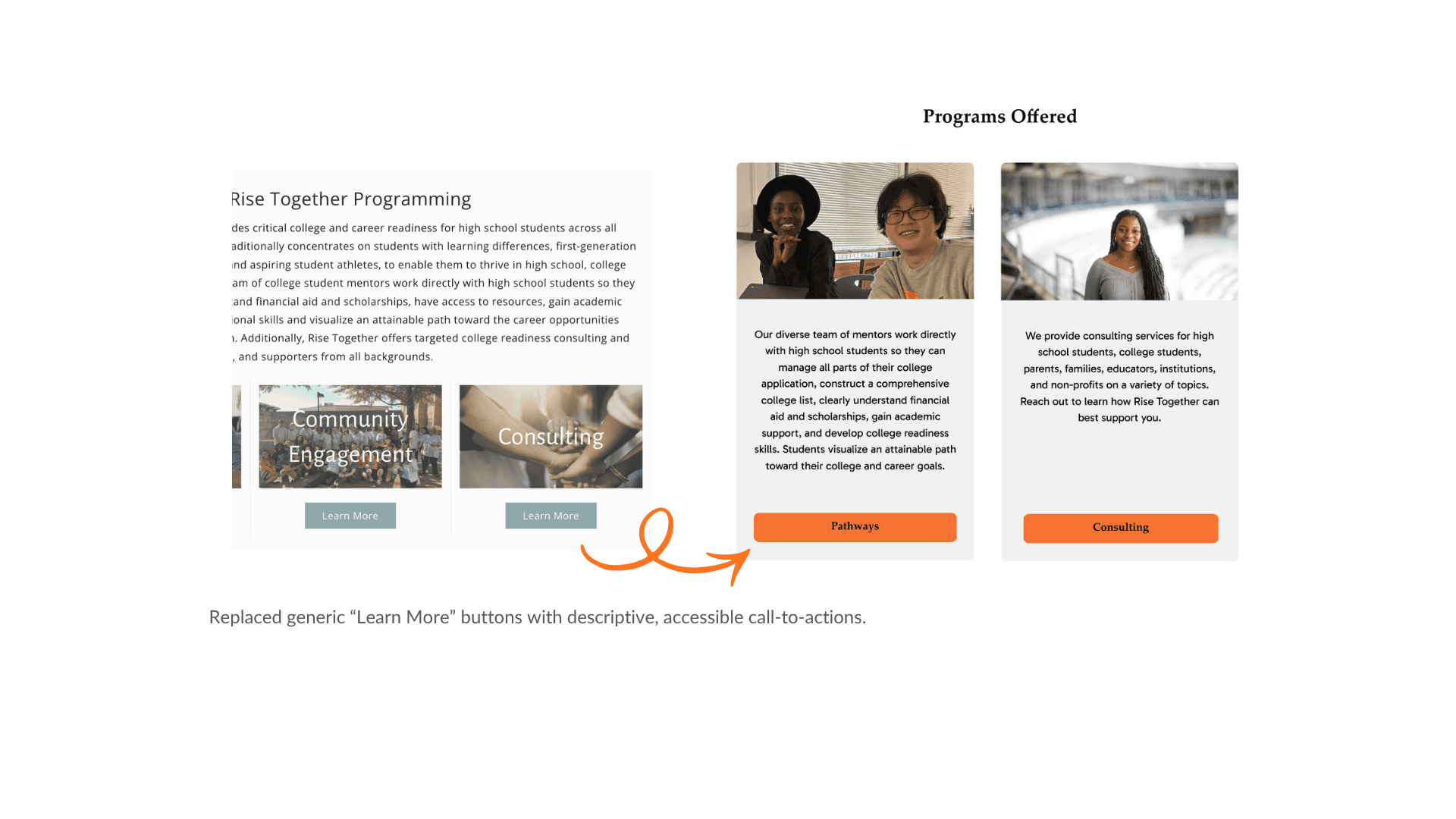
Bring metrics and impact to forefront
Surface mission on homepage and make it shorter
Simplify navigation, eliminate redundancy
Usability study revealed greater need for navigation clarity
I interviewed five people asking them to complete specific user tasks, counting how many clicks it took each person to complete their task. On average, it took x amount of clicks to get to the mission statement. I gathered some key insights from this usability study.
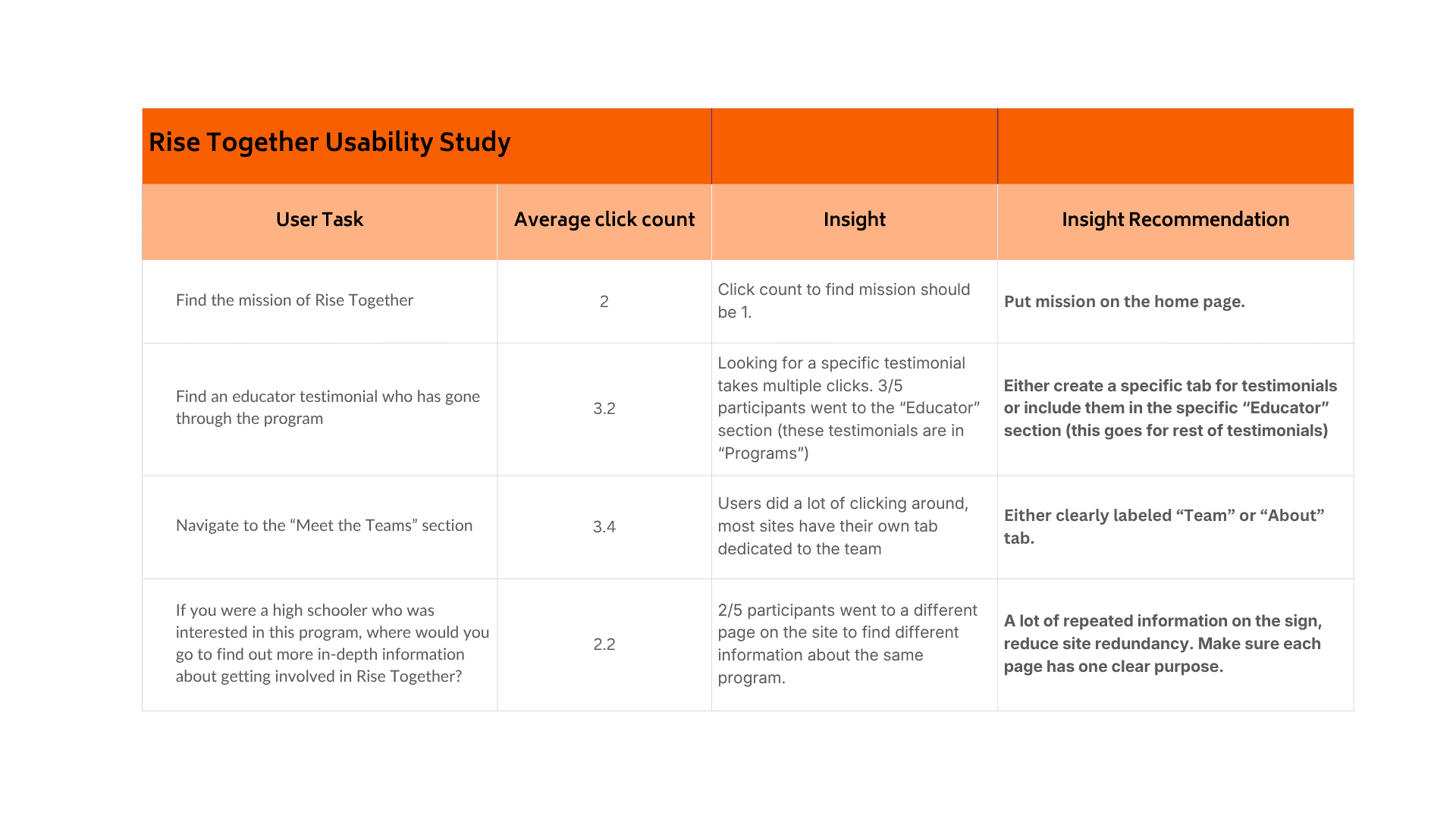
"I didn't expect the 'Overview' tab to have a mission statement. - Diya Patel, Rise Together Mentee
"I felt like I had really think to know what was under each tab". - Tionna, Rise Together Leadership Team
Develop
Explorations in Design
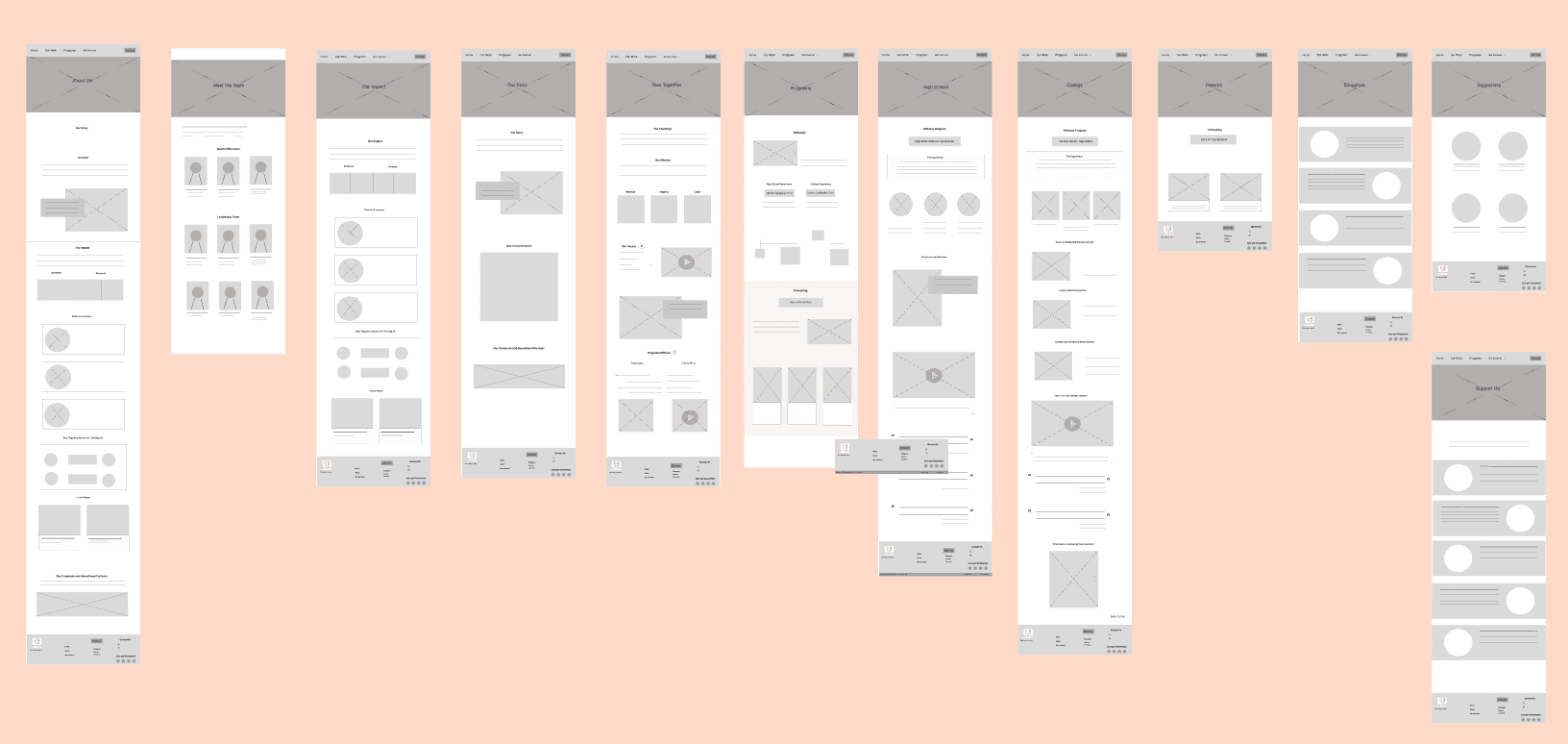
Redesigning the information architecture
The previous navigation bar made the site have 18 pages. I restructured the information architecture of the site to reduce the website to 11 pages total, with three tabs.

Competitor analysis showed that an effective website had no more than 7 tabs and 13 pages. Guided by this and the usability study, I restructured the site so every page had a defined purpose. During my audit, I grouped overlapping content and removed redundancies to simplify the user experience,

Changes to the homepage
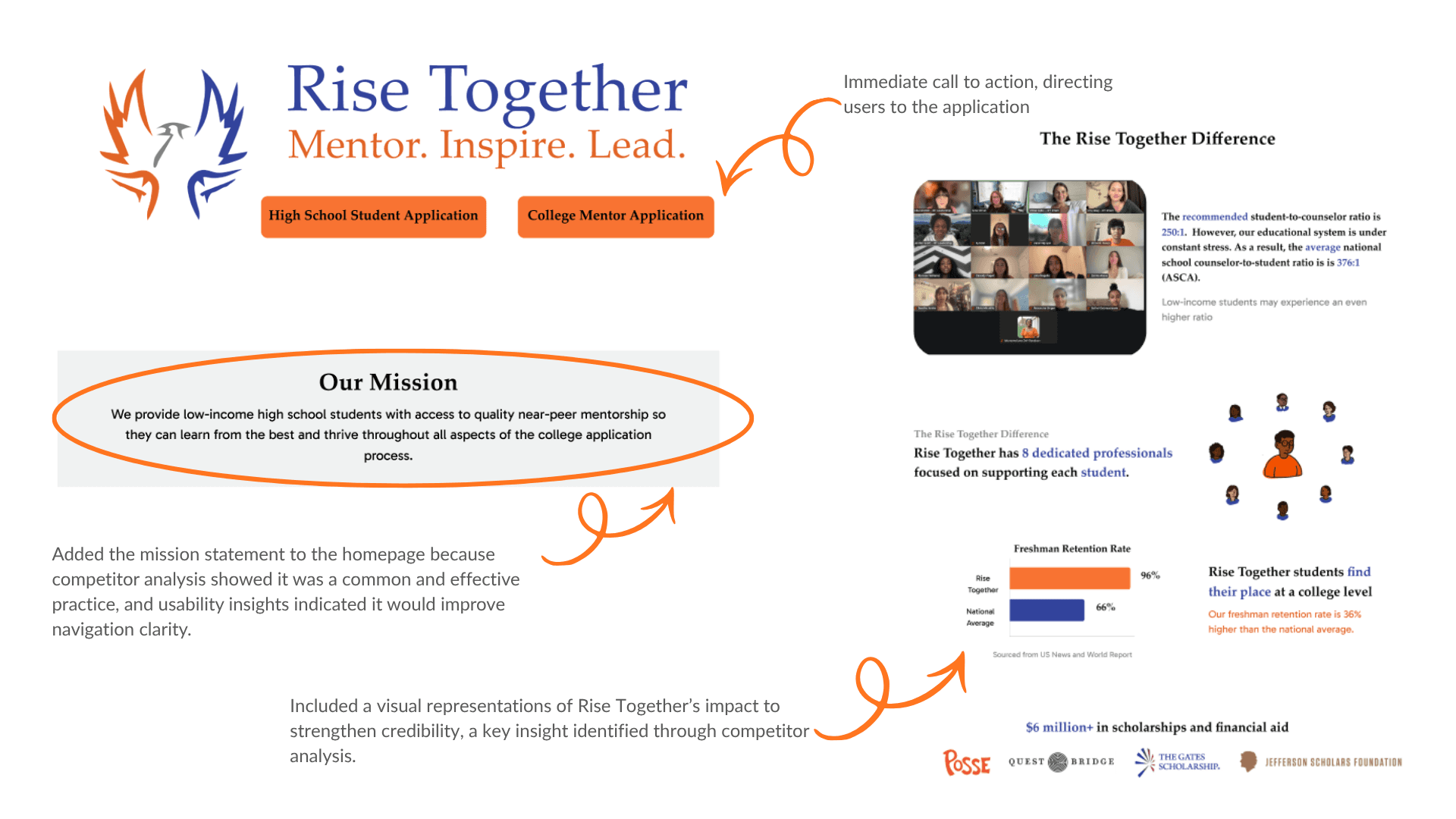
Replacing the "Learn More" buttons
The New Design System
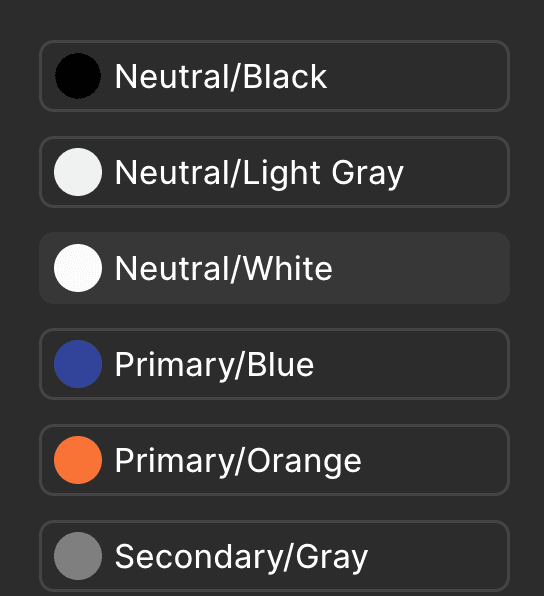
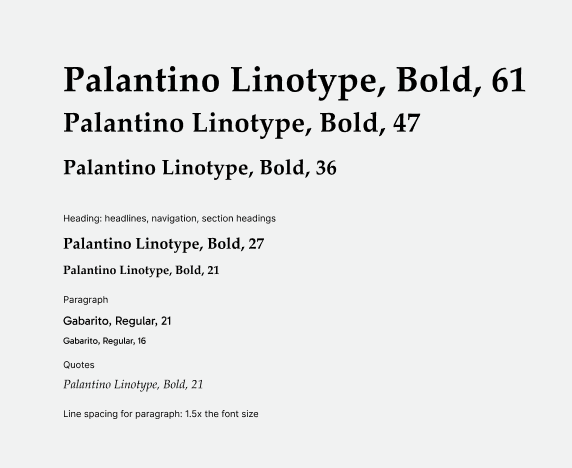
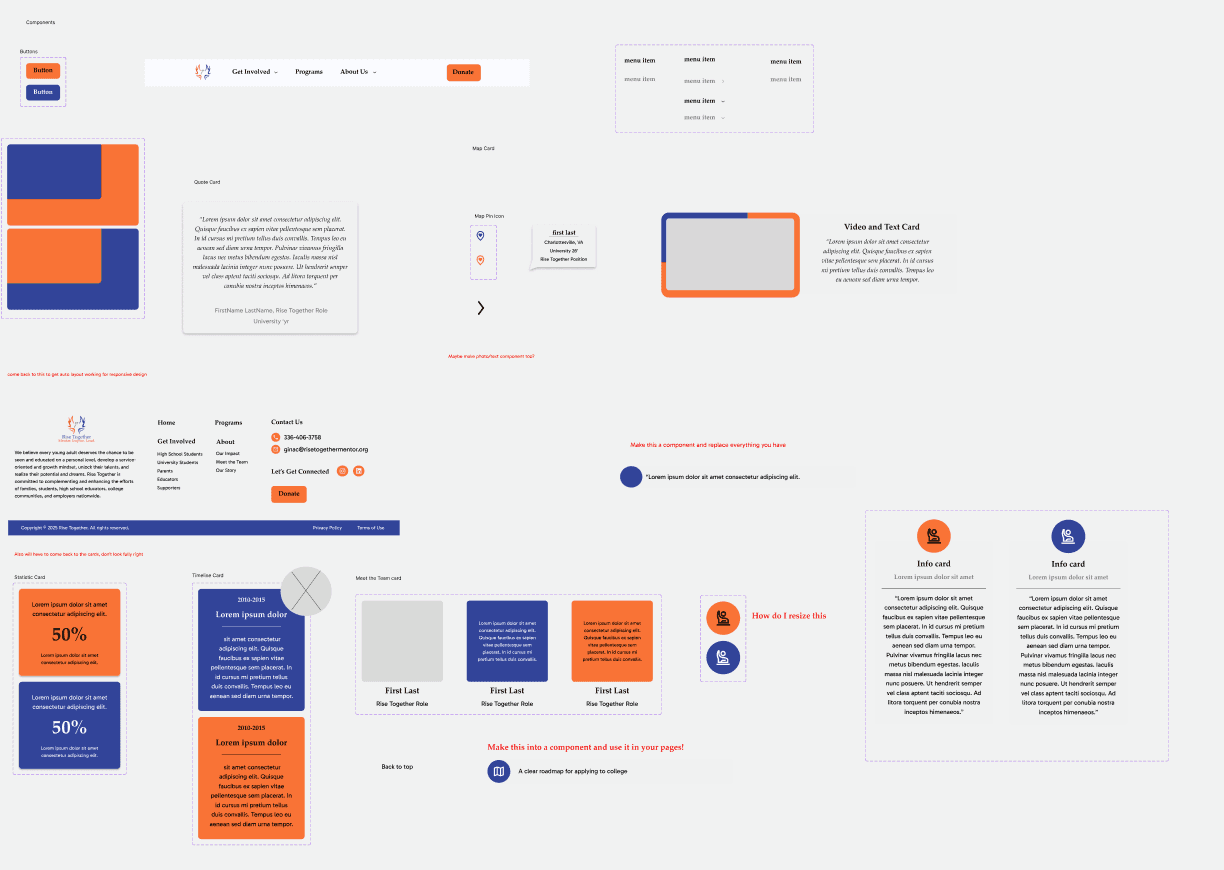
I created a new design system to improve visual consistency and better align the product with Rise Together's brand. This system resolved spacing and alignment issues identified in the site audit and was built to follow WCAG guidelines.
Addressing text overload
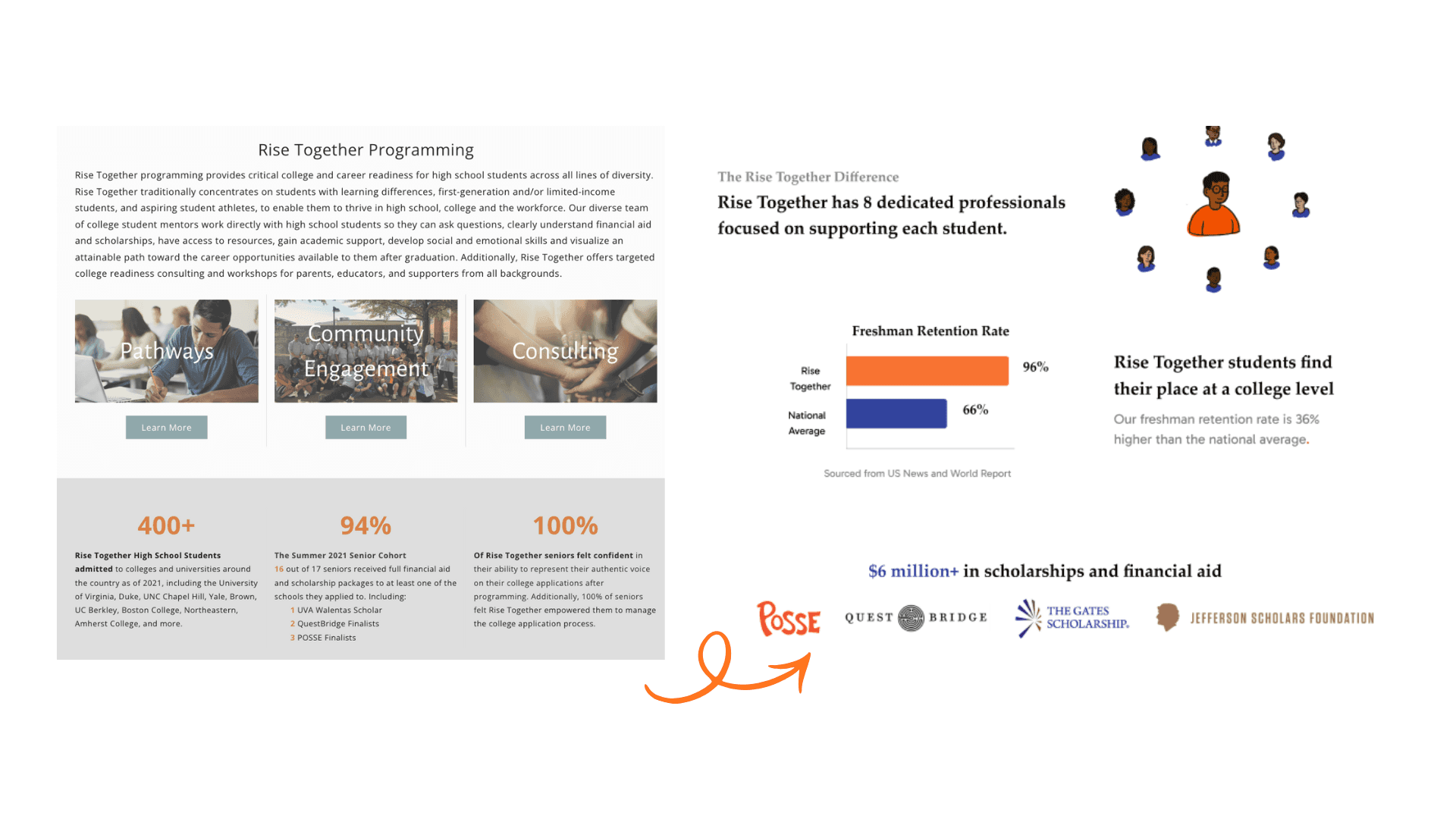
Since this website was very text heavy, I focused on trying to visualize the impact with more imagery and graphs.. I also added the scholarship logos for social proof.
I implemented cards into the design system to split up information into more digestible sections,
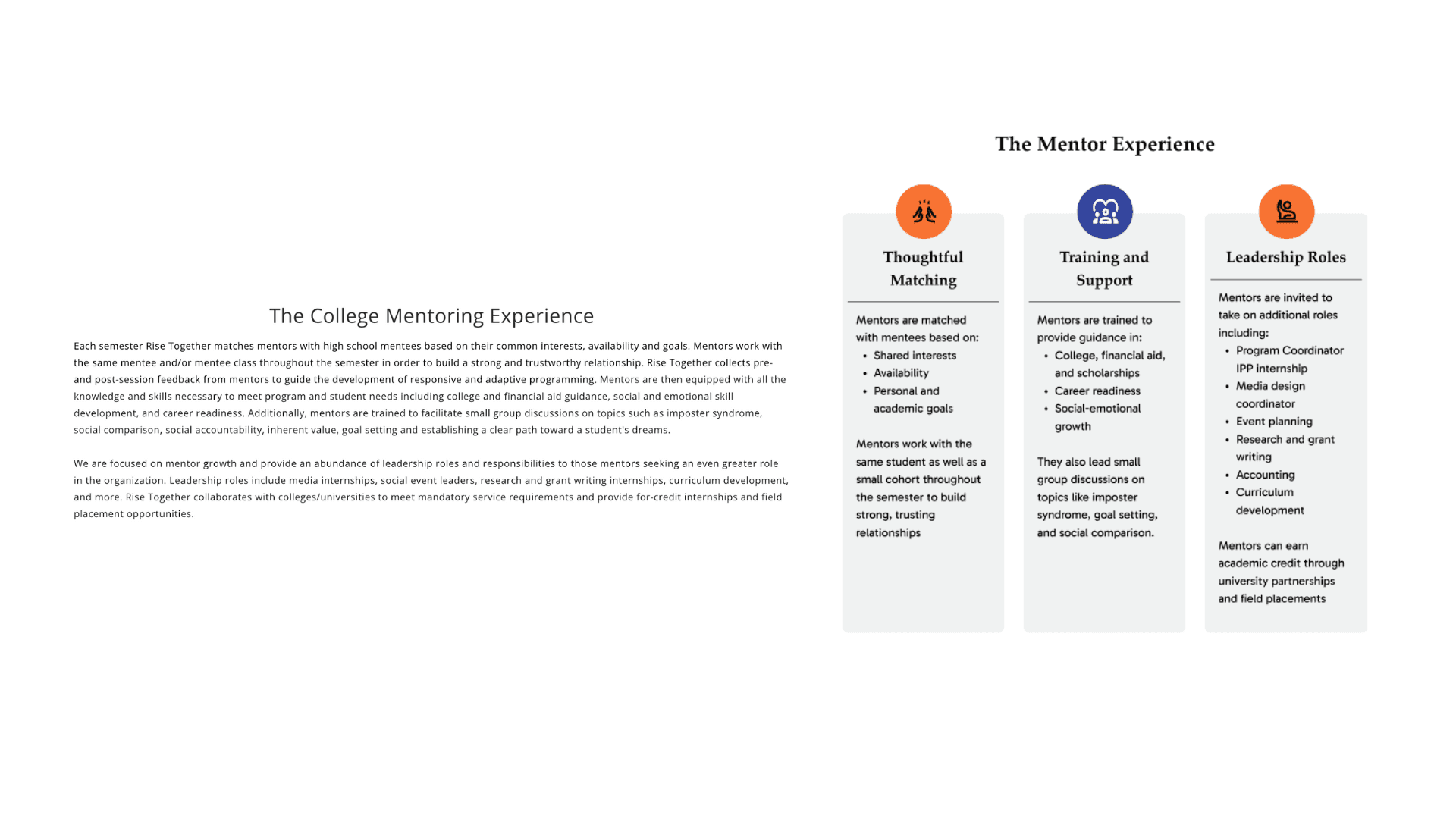
Previous Website


Impact
My redesign reduced the average click count by 40%
Before launching the website, I conducted a second usability study to validate the impact of my redesign. The results showed a 40% reduction in average clicks per task (from 2.16 to 1.3), and users expressed strong satisfaction with the updated interface, frequently noting the improved UI and overall ease of navigation.
Conclusion
Reflection and next steps
Communication with the client is vital for design decisions
As the sole designer, I met with my manager, Gina, each week to ensure the design aligned with her vision. This collaboration led to multiple iterations and required accommodating several of her content preferences, including incorporating more text-heavy sections when needed.
Designing with an impact brings me fulfillment
During my internship, I was able to join several mentoring sessions, and hearing Gina speak about how meaningful the program is to her made the work feel even more impactful. Seeing the students who benefit from Rise Together gave me a deeper sense of purpose and intrinsic motivation throughout the redesign.
Gaining more designer feedback
Although leading the entire process was a valuable experience, I realized the project would have benefited from more designer input. Before the website relaunch, I plan to incorporate additional feedback from other designers to strengthen the final product.